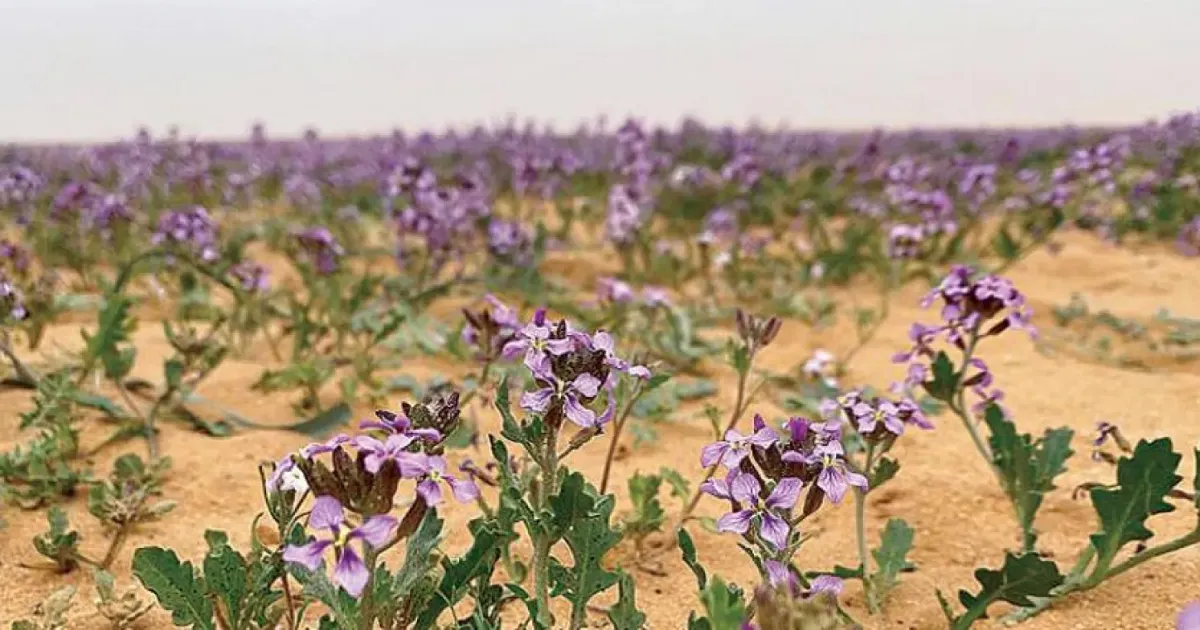
Arar, Saudi Arabia, in the Northern Borders region, the plant daqqaqa is an uncommon and important plant, and the level of botanical richness of this area is very high. This is a small, yearly herb that grows in arid desert conditions and is regarded as one of the indicators of the unique ecosystem of the region.
Unique Features of Daqqaqa
Daqqaqa is a herb that is not very big, usually 10-15 cm, and has a slender stem and young leaves. Its leaves are usually placed on the stem itself to allow less water to be lost, and it is planted on soils that are clay-rich, where the water can take longer to dry up after seasonal rainfalls. It has a fragile composition, which makes it survive drought and extreme heat.
Ecological Importance
This herb does not grow everywhere, so it is a marker of the well-being of the environment. It is not normally consumed by livestock, providing some natural protection. Nevertheless, it has a high sensitivity to land disturbance and climatic changes, underscoring the need to conserve.
Season Growth and Vegetation
Following rainfall, there is a rapid growth of daqqaqa and other desert plants, and this exhibits the strength of vegetation in dry areas. This is seasonal greening, which contributes to the overall biodiversity of the desert.
Conservation and Awareness
Daqqaqa conservation also conserves vulnerable desert areas. Documentation of such rare plants creates awareness of botanical diversity in the Kingdom of Saudi Arabia and motivates the need to protect these ecosystems in the future.
Protecting daqqaqa is essential for preserving fragile desert habitats and maintaining the biodiversity of Saudi Arabia’s Northern Borders. Conservation initiatives, including research and public awareness campaigns, play a key role in ensuring these ecosystems remain healthy. Platforms like Arab Updates provide valuable insights into environmental efforts and rare plant species, helping communities understand the importance of safeguarding their natural heritage for future generations.