
Introduction
The environment of Saudi Arabia has been one of the most brutal on earth and has influenced survival and day to day lives. In arid deserts and rugged ravines, people have established powerful systems and customs enabling them to survive and thrive even in the midst of heat waves and a scarcity of water. Ushar is a traditional system related to land use and agriculture and is significant in sustaining life in these harsh conditions.
Understanding Ushar and Its Function
Ushar is regarded as the customary beliefs relating to land, farming and the survival of the community. In low rainfall and high temperature areas, such systems assist individuals to use resources sparingly. These traditions are very much related to the local culture and have been transferred over generations and are used to sustain communities in challenging conditions.
The environment of Saudi Arabia is mostly desert and has minimal natural water resources. Due to this reason, such systems as Ushar emphasize on sound land use, water conservation and community collaboration. These are the elements needed to survive in regions where the natural resources are limited.
Harsh Climates Shapes Daily Life
Saudi Arabia has extreme climatic conditions which include high temperatures and low rainfall. This renders farming and settlement challenging. In the past, people had a shortage of water to landscape and carry out farming activities; hence, they had to improvise using effective techniques and crops resistant to drought.
Societies have depended on practices that minimize the use of water and safeguard crops. The use of native plants and good irrigation systems are some of the techniques that have enabled people to survive and stay productive in the desert.
Landscape Variety and Adaptation
Saudi Arabia is a diverse country in terms of landscapes, though many people might think that it is just a desert, there are also valleys, mountains, and oases. These ecosystems favor various types of life and necessitate various methods of survival.
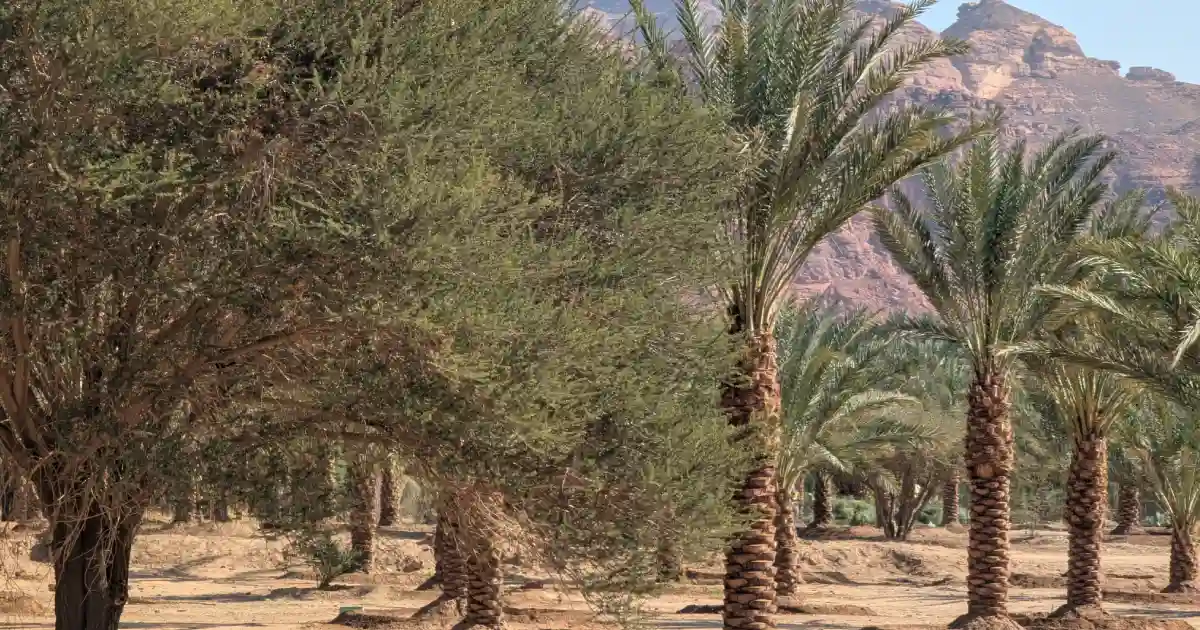
With the help of underground water systems, farming and settlement can be established even during dry climates in oasis regions, such as in Al-Ahsa. These spheres demonstrate the interaction of natural and traditional systems that help to sustain life.
Modern Influence and Sustainability
Even nowadays, such traditional practices as Ushar still impact modern thinking on sustainability. As cities are becoming more urbanized, the emphasis on water conservation, smart irrigation, and eco-friendly landscaping is increasing. Such activities are in line with the national objectives of establishing sustainable living standards without compromising the cultural heritage.
The integration of the traditional knowledge and modern technology is assisting Saudi Arabia to cope better with the environment, as well as be ready to face the challenges that will come in the future.
Conclusion
Ushar continues to play a significant role in the lives of Saudi Arabia in its desolate areas. It represents the way communities have managed to survive in the extreme conditions by means of knowledge, collaboration, and resourcefulness. These traditional systems have still something to offer to sustainable living as the country continues to develop.
For more regional insights and developments, follow Arab Updates.